Wireless Communications
Mayflower has a proven track record in the development of advanced wireless communication technologies for military platforms and transitioning them to the commercial market

Mayflower’s cutting-edge research and development in wireless communication is driven by a singular vision: wired performance with wireless ubiquity. Mayflower smart radio and wired-equivalent access technologies use the knowledge of transmission conditions and an arsenal of advanced signal processing to bring the performance and reliability of wired communication to wireless. The Mayflower versatile network technology provides ubiquitous, network-transparent access. A focus application of the Mayflower radio, access, and network technologies is an airborne wireless data link for test range and wartime operations, which consists of Mayflower smart radios on board missiles and aircrafts. These radios can be packaged for use as telemetry data links in a test range during peacetime, and as general purpose data links for wartime operations. Smart radios for this application will deploy algorithms developed by Mayflower that provide high data rates and Quality of Service (QoS) even though the radio platforms are moving at supersonic velocities.
Another focus application of the Mayflower wireless communication technology is soldier radio, which places a premium on power efficiency. For this application, the Mayflower smart radio deploys algorithms that optimize the wireless communication for power efficiency. This power efficiency gain is augmented by cognitive MAC technology that avoids power-draining transmission loss due to interference and channel fades, and collaborative networking technology that enables the radios to share resources.
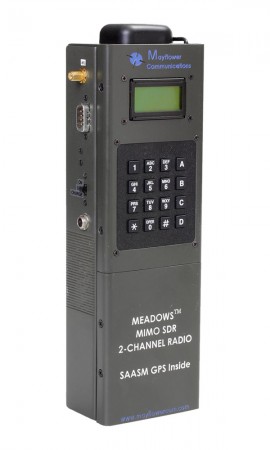
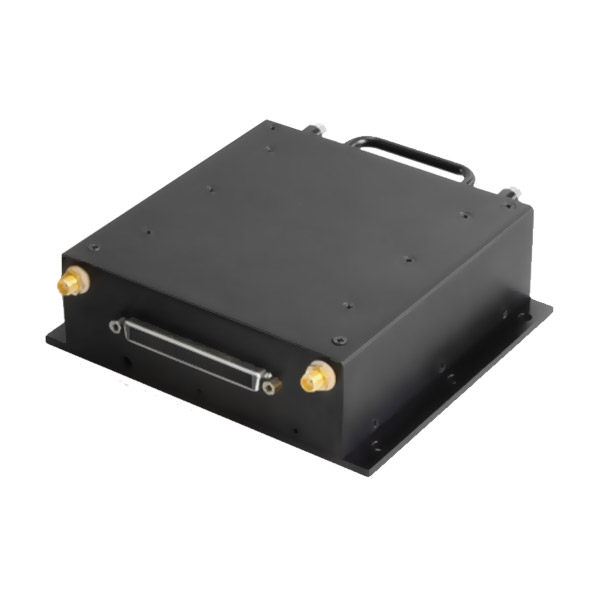
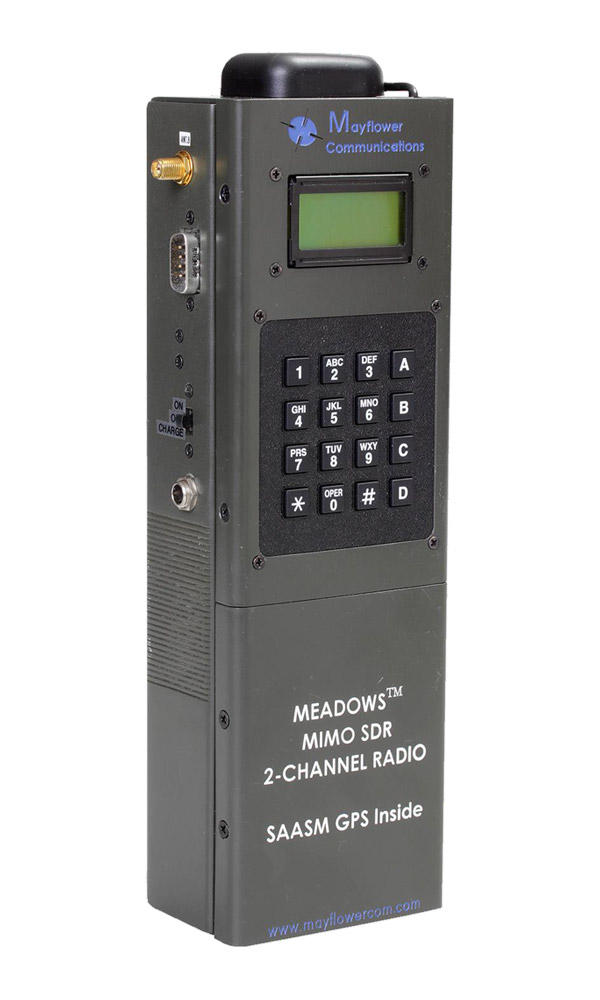
Mayflower smart radio technology uses antenna resources with advanced adaptive signal processing to achieve high data rates, reliability, and power efficiency. Using signal processing that includes Multi Input Multi Output (MIMO) algorithms, the Mayflower smart radio technology delivers high level of performance within the available computational and power resources.
MIMO is the centerpiece of Mayflower smart radio technology. Mayflower uses advanced MIMO algorithms to provide high data rates, link stability, jamming and interference immunity, and power efficiency.
Mayflower smart radio technology is designed in a flexible software-defined architecture. This enables the radio transmission waveform to be changed at a moment’s notice, to one most suitable for the current mission/application. It also enables the implementation of new waveforms as a software update.
Mayflower, as a part of its smart radio technology, has developed several advanced algorithms, such as the patent-pending low-cost digital Anti-Jam algorithm, and a receiver structure for reliable wireless communication at supersonic velocities.
The following are some unique capabilities of the Mayflower smart radio technology:
Mayflower wired-equivalent access technology provides the reliability of wired communication over wireless. Wireless transmission medium is inherently a broadcast medium: every wireless transmission is accessible to all wireless receivers in range. As a result, unintentional interference is rampant, not only between radios of the same technology such as Wi-Fi, but also between unrelated technologies such as the electromagnetic emissions from cordless phones and microwave ovens interfering with Wi-Fi radios. Moreover, the quality of wireless transmission channel fluctuates over time. Mayflower is developing, in collaboration with the University of California, Davis, Cognitive Medium Access Control (MAC) technology that uses advanced statistical models for cognizance of the wireless transmission environment, and uses this knowledge to provide reliable communication performance over unreliable and contentious wireless transmission medium.
Mayflower is also developing, in collaboration with the Rutgers University, Infostation MAC technology that uses knowledge of the wireless transmission conditions to achieve very high throughput, for mission-critical delivery of large amounts of data, of the order of several hundreds of Megabytes.
Yet another focus of Mayflower wired-equivalent access is MAC protocols for self-organizing mobile access networks (MANETs) with very high speed mobility and mission-critical requirements, such as vehicular and airborne tactical ad hoc networks.
Mayflower versatile network technology is designed to provide ubiquitous, network-transparent access. There are two components to the Mayflower versatile network technology: (1) Multi-radio Network that accommodates a variety of radio technologies, (2) Multi-network Stack on the radio that works with a variety of networks.
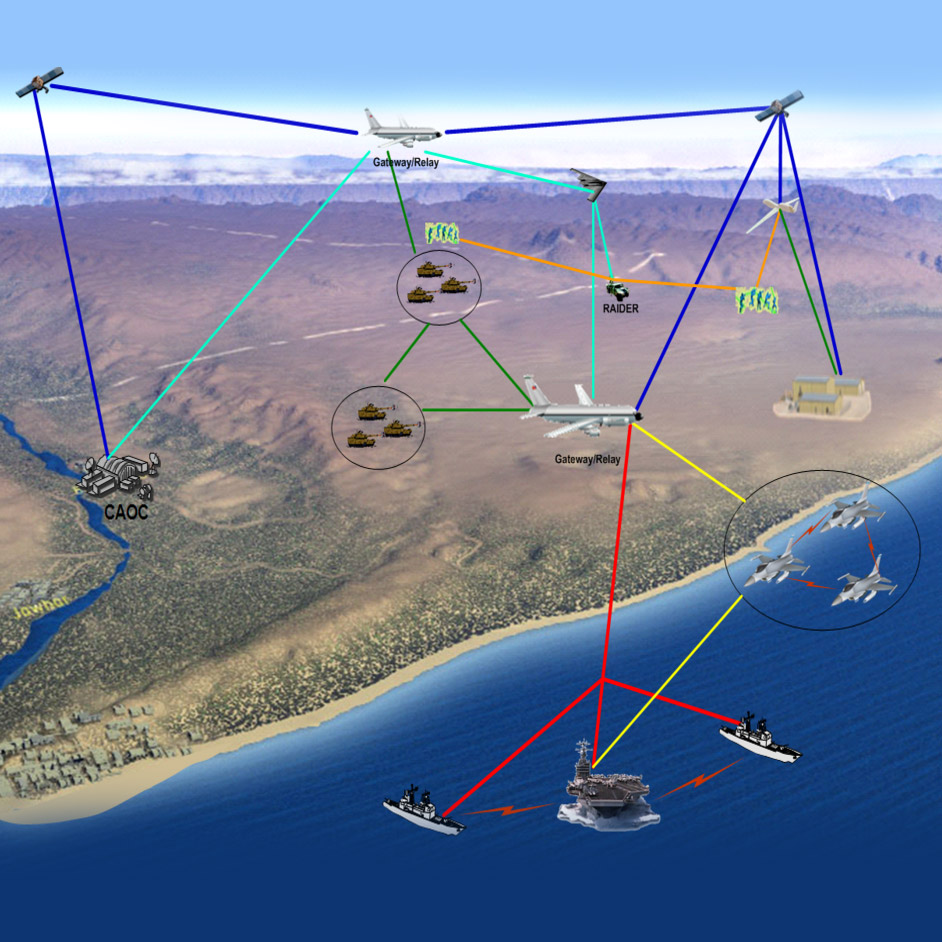
Mayflower Multi-radio Network is an Internet Protocol (IP)-based technology that uses a two-tiered design, consisting of the IP Radio Access Network (IP RAN) and the IP Core Network (IP CN). The signaling and data paths of RAN are implemented in server-gateway split architecture. This patent-pending tiered-and-split design enables the accommodation of multiple radio access technologies. An example scenario is a Mayflower Multi-radio Network that simultaneously accommodates a satellite radio link, a UMTS-TDD radio link, and a legacy telemetry radio link such as Advanced Range Telemetry (ARTM).
Mayflower Multi-network Stack consists of networking protocol components to enable radios to work with infrastuctured networks such as UMTS-TDD, partially infrastructured network such as Infostation Network, and self-configuring mobile ad hoc networks (MANET).
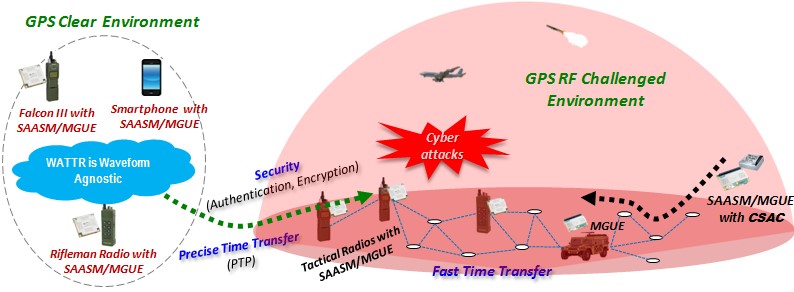
Mayflower developed this technology leveraging waveforms for an accurate and secure time transfer to networked GPS Receivers. This technology supports military GPS operations in challenged RF environments due to RF interference or jamming, while accounting for uncertainty in universal time (UTC) of existing commercial and tactical wireless infrastructure. This technology can identify available networked time sources such as GPS Time, Chip Scale Atomic Clocks (CSAC), and existing embedded oscillators to select the optimal source for obtaining UTC.
Mayflower is in the process of developing a technology for next generation MANET for Aircraft. This technology integrates Autonomous Topology Management, Rapid Peer Authentication to prevent adversaries from joining the network, Cognitive MAC with MIMO, and an anti-jamming solution. This technology is used for Strategic Aircraft operations.