GPS Anti-Jam
Mayflower is a pioneer in digital Anti-Jam with a broad portfolio of low cost, low power, robust Anti-Jam solutions for GPS receivers, and for wireless communication systems.

Mayflower has been developing state-of-the-art GPS Anti-Jam systems for close to 30 years. Mayflower’s Anti-Jam technology has been developed and refined over this period under numerous DoD-sponsored programs, starting in the late 1980s with an Air Force sponsored Technology Demonstration program to design an adaptive temporal filter (ATF) for suppressing narrowband jammers. Mayflower continued the technology improvements in the 1990s with multiple programs sponsored by the Army and the Navy, to design adaptive spatial/temporal filters for suppressing broadband and narrowband jammers. The current portfolio of high performance, very small SWaP, robust Anti-Jam products is the result of continuous improvements to the Mayflower AJ technology. Mayflower’s ongoing GPS AJ technology innovations will continue transform the military GPS Anti-Jam systems to our nation’s modern military needs
Mayflower’s flagship Anti-Jam Electronics (AE) product, Small Antenna System (SAS), also known as NavGuard® 500 was developed under a highly competitive program sponsored by the Advanced Technology Branch of the GPS Directorate. SAS is one of the most mature and smallest 5-Channel Anti-Jam product extensively tested by many DoD branches on many air/ ground and manned/unmanned platforms.
The Communications and GPS Navigation Program Office (PMW/A 170), headquartered in San Diego, mounted a Small Antenna System (SAS) on an unmanned aircraft, then placed the small UAV in a room lined with signal-absorbent material at the FARM (Facilities for Antenna and RCS Measurements), where it was subjected to GPS jamming signals.
Equipped with model jammers, the FARM facility was used as a stage for the “enemy” to jam the GPS signal and try to knock the UAV off course. If knocked off course, the UAV would not be able to relay critical intelligence back to the ground control station — disrupting communications among U.S. and allied forces’ ships, aircraft and submarines. In a worst-case scenario, GPS jamming could even cause UAVs to crash.
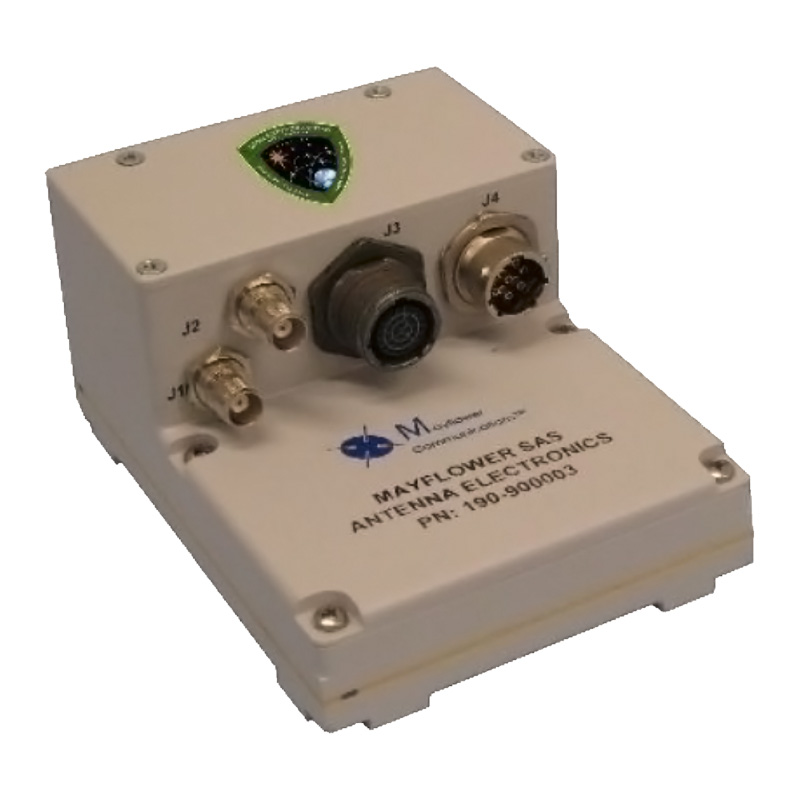
Mayflower SAS Anti-Jam System at NAVAIR FARM Chamber.
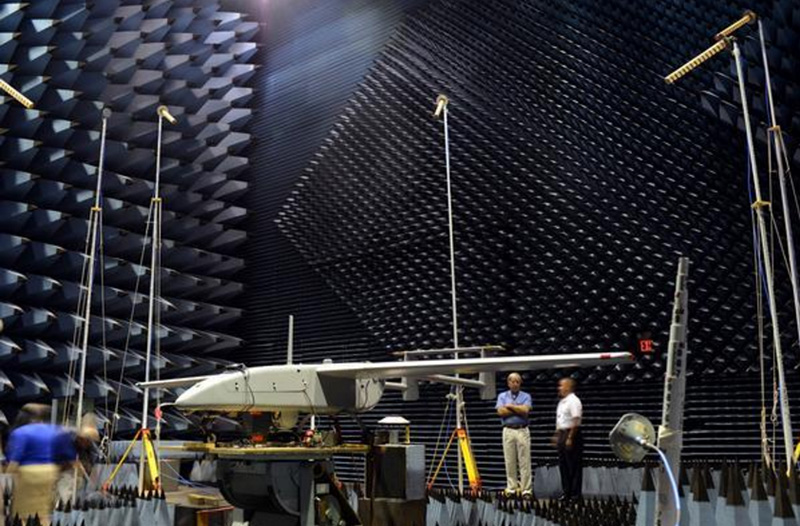
Testing of Mayflower Anti-Jam System at NAVAIR FARM Chamber.
The GAJAS 7-Channel Anti-Jam System meets the Army’s critical need for a very high performance AJ system to protect the GPS navigation capability on Pseudolite (PL) platform (Ground and Airborne platforms) against hostile jamming as well as in the presence of strong RF emissions from the co-located Pseudolite transmitter. The GAJAS Anti-Jam System for PL platform leverages the TNT Anti-Jam system and incorporates additional capabilities to address the PL platform requirements. This development is currently being carried out under the Army sponsored program.
Mayflower is developing an Anti-Jam system (leveraging the MAGNA-F Anti-Jam system) that will be SWaP-suitable for use on the Army mounted vehicles.
Key Specifications are:
(1) high performance anti-jam
(2) small SWaP modular solution
(3) co-site PL interference mitigation
(4) jammer detection and jammer direction-of-arrival for situation awareness.
The configuration will mitigate up to 6 broadband and additional narrowband jammers (Performance comparable to ADAP).